European fertilizer producers are idling ammonia plants after a sharp rise in natural gas prices, the Financial Times reported on November 25. Yara has cut European ammonia output by about 27%, and AGF Nitrogen has shut part of its ammonia production and is substituting cheaper imported ammonia for its own supply.
The immediate effect is higher local production cost and a wider gap between European gas-based output and producers in regions with cheaper energy. That cost gap is quietly redrawing the map of where fertilizer is made, and the same force is visible in where production equipment is being ordered.
Mordor Intelligence estimates Asia-Pacific holds 35.06% of the fertilizer processing and production equipment market in 2026 and will grow about 6.18% annually through 2031, while South America, the Middle East and Africa are expanding as greenfield destinations for new plants.
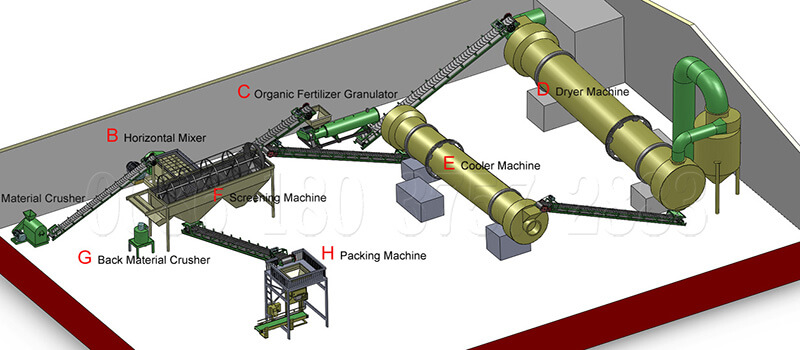
For a producer the takeaway is practical: in a market shaped by energy and input-price volatility, lines that control cost per tonne win. That means accurate automatic batching to protect formula margins, energy-efficient drying and cooling, and flexible granulation that can switch between organic, NPK and compound products as prices move.
Shunxin has supplied complete organic, NPK and compound fertilizer lines since 2005, covering batching, mixing, granulation, drying, cooling, screening, coating and packing. If you are building capacity in a growing market or upgrading an existing plant, send us your raw materials and target output, and our engineers will return a recommended configuration with itemized pricing within 24 hours.